
Website Design vs Website Development: 7 Key Differences Every Business Should Know in 2026

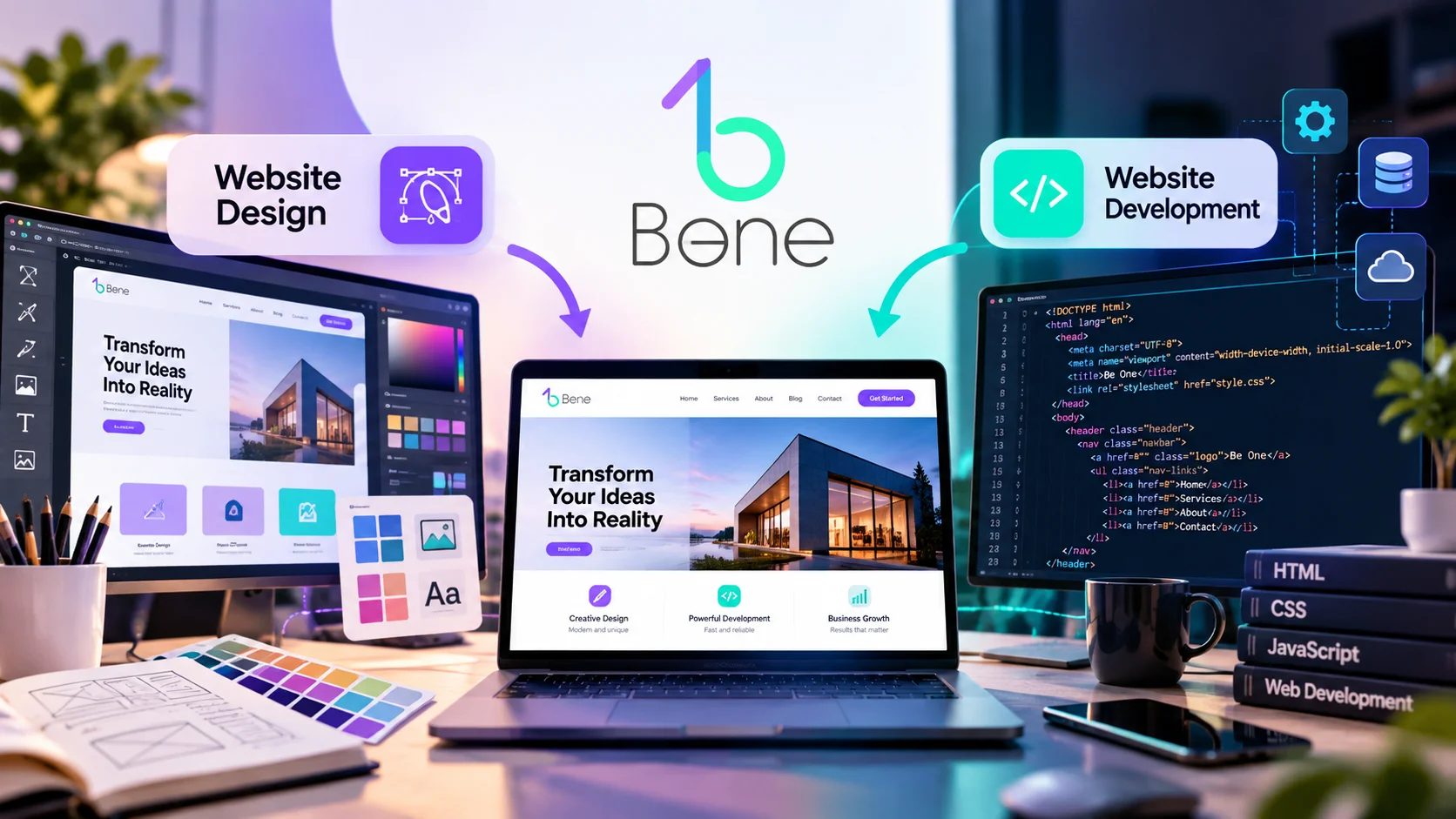
When planning a new website, one of the first questions business owners ask is whether to focus on website design vs website development . These terms sound similar, but they describe two different parts of building a website. Website design vs development is not simply a choice between making a website look good and making it work. Design shapes how people see, understand, and use a website, while development turns the design into a working digital product. Both are important, and the right balance depends on your business goals, audience, budget, and the type of website you need.
Imagine two businesses launching websites on the same day. The first has an attractive design, but its contact form does not work and its pages load slowly. The second works perfectly, but visitors cannot understand its services or find the information they need. Both websites have problems, although for different reasons.
This is why understanding website design vs website development before hiring a team can save time, reduce unnecessary costs, and help you make better decisions. In this guide, we will explain what designers and developers do, how their work connects, what affects project costs, and how to choose the right solution for your business.
What Is Website Design vs Website Development?
The main difference between website design vs website development is the role each one plays in creating a website. Website design focuses on appearance, layout, usability, and the visitor experience. Website development focuses on the code, systems, and functions that make the website work.
A designer may decide where a service button should appear, how a page should be organized, and which colors support the brand. A developer then builds the layout, connects the buttons, creates the required functions, and makes sure the website works across supported browsers and devices.
However, these roles are not always completely separate. Some professionals handle both design and development, especially on smaller projects. Larger projects may involve separate designers, front-end developers, back-end developers, content specialists, and SEO professionals.
What Does Website Design Include?
In website design vs development, design starts by understanding the people who will use the website and the actions the business wants them to take.
Website design may include:
- Page layout: Organizing content, images, buttons, menus, and other elements.
- Visual identity: Using brand colors, typography, images, and visual styles consistently.
- User experience (UX): Making it easy for visitors to understand the website and complete tasks.
- User interface (UI): Designing the visible controls, forms, menus, and interactive elements.
- Responsive layouts: Planning how pages should appear on desktop computers, tablets, and mobile phones.
- Prototypes: Creating test versions of pages before development begins.
For example, a company that sells industrial safety equipment may need a design that helps buyers find products by category, compare specifications, and request a quotation. An attractive homepage alone will not solve those needs. The designer must organize the website around how customers search for products.
This practical approach makes website design vs website development a business decision, not only a visual one.
What Does Website Development Include?
Development turns the planned website into a functional system. Depending on the project, it can involve front-end coding, back-end programming, database setup, content management systems, integrations, security, and testing.
Common development tasks include:
- Building page layouts with HTML, CSS, and JavaScript.
- Creating interactive features such as menus, filters, and forms.
- Connecting databases and server-side systems when required.
- Setting up WordPress or another content management system.
- Integrating payment gateways, booking systems, CRM tools, or other services.
- Improving loading performance and technical reliability.
- Testing the website across supported devices and browsers.
In website design vs development, development is the stage that makes the planned experience possible. A designer can create a product filter in a prototype, but the developer must connect it to the product data and make sure it returns the correct results.
Website Design vs Development: A Simple Comparison
A direct comparison of website design vs website development makes it easier to understand how the two roles differ and where they overlap.
| Area | Website Design | Website Development |
| Main purpose | Create a clear and useful visual experience | Build a working website |
| Main focus | Layout, appearance, usability, and user journeys | Code, functions, data, and integrations |
| Typical tools | Figma, Adobe tools, wireframing and prototyping tools | Code editors, frameworks, development tools, and CMS platforms |
| Common deliverables | Wireframes, visual designs, prototypes, design systems | Working pages, functions, integrations, and technical setup |
| Main questions | Can visitors understand and use the website? | Does the website work correctly and reliably? |
| Common problems | Confusing layouts, poor navigation, inconsistent visuals | Broken forms, coding errors, slow functions, integration issues |
| Testing | Usability, visual consistency, and user flows | Functionality, compatibility, security, and performance |
| Business impact | Helps visitors understand the offer and take action | Makes the offer accessible and the required actions possible |
The comparison does not mean design has no technical concerns or development has no impact on usability. A developer can improve the user experience through faster loading and better interactions, while a designer can help reduce development complexity by creating practical layouts.
The best results from website design vs development come when both teams share information early rather than working as two disconnected departments.
Website Design vs Website Development: Why Design Comes First
In many projects, design begins before full development because the team needs to agree on the page structure, content hierarchy, and user journey. This approach makes website design vs website development easier to manage, but it does not mean development must wait until every design detail is final. A typical design process begins with business goals and user needs. The team then creates a sitemap, wireframes, and visual concepts. Once the main structure is approved, developers can build the website with a clearer understanding of what each page needs to do.
Step 1: Define the Website Goal
Before comparing website design vs website development, identify the main purpose of the website.
Is it meant to:
- Generate leads
- Sell products
- Explain a service
- Publish information
- Support existing customers
A website may serve several purposes, but it should have clear priorities.
For example, a law firm may need service pages, lawyer profiles, contact details, and consultation forms. An online store may need product categories, search filters, a shopping cart, payment options, and order tracking.
The goal determines which design decisions and development features are necessary.
Step 2: Plan the Structure
The next stage of website design vs development is organizing the website into pages and defining how visitors move between them.
| Website Type | Typical Pages and Features |
|---|---|
| Simple business website | Homepage, service pages, about page, contact page, and blog |
| Large online store | Category pages, product pages, filters, and customer account areas |
A clear sitemap helps the team identify missing pages before development starts. It also creates an early opportunity to plan internal links and SEO-friendly navigation.
Step 3: Create Wireframes and Visual Designs
Wireframes show the main layout of a page without focusing on every visual detail. They help the team decide where information belongs and which actions should be easy to find.
The visual design comes later, adding colors, typography, imagery, and brand elements. This stage of website design vs website development allows the client to review the experience before the team invests time in building it.
For a more complex digital product, a prototype can show how users move between screens. A team developing an application may use a mobile app mockup to test the proposed interface before writing the full application code.
Step 4: Build and Test the Website
Once the structure and design are sufficiently clear, development can begin. The developer creates the pages, connects the required features, and prepares the website for testing.
The team should not wait until launch to test everything. Reviewing important functions during development helps identify issues while they are still relatively easy to fix.
At this stage, website design vs development becomes a shared process:
- Designer: Checks whether the built pages match the approved experience.
- Developer: Checks whether the functions behave as expected.
Website Design vs Website Development: Which Skills Does Each Professional Need?
The skills required for website design vs website development differ because each role solves different problems. Understanding these differences helps businesses hire the right professional instead of expecting one person to cover every specialty.
Skills of a Website Designer
A website designer needs more than a good eye for colors. The role requires an understanding of users, information structure, visual communication, and practical business goals.
Important skills include:
- Visual hierarchy and page composition.
- Typography, spacing, color, and image selection.
- User experience and interface design.
- Wireframing and prototyping.
- Responsive layout planning.
- Accessibility awareness.
- Communication and design feedback.
- Understanding how website content supports user decisions.
For example, a designer working on a service website should understand why the main service needs a clear explanation, why trust information matters, and where visitors may expect to find contact details.
In website design vs development, the designer’s value is not measured by how many visual effects appear on the page. It is measured by how well the design helps people understand and use the website.
Skills of a Website Developer
A developer needs to understand how websites are built and maintained. The required technical depth depends on whether the project is a simple WordPress site, a custom web application, or a complex online store.
Common skills include:
- HTML and CSS for page structure and styling.
- JavaScript for interactive behavior.
- Server-side programming when custom functions are needed.
- Database design and data handling for relevant projects.
- Content management systems such as WordPress.
- API integrations.
- Security and performance practices.
- Debugging and testing.
- Version control and maintenance workflows.
A developer building a booking website, for example, may need to manage available time slots, prevent conflicting bookings, send confirmation emails, and connect the system to payment services.
These functions show why website design vs development requires different types of thinking. A design can show what the booking process should look like, but development must make the process reliable.
Can One Person Handle Website Design and Development?
Yes. One professional can handle both roles, especially for small websites built with established tools and templates. However, the scope matters.
| Project Type | Suitable Approach |
|---|---|
| Small company website | A freelancer who can create a WordPress website and adjust its design may be a good fit |
| Custom platform with complex accounts, payment workflows, and integrations | Several specialists may be needed |
When comparing website design vs development providers, ask to see examples of similar projects. Confirm what the professional will deliver, which tasks are included, and whether specialist support is available when needed.
Website Design vs Website Development: What Affects the Cost?
The cost of website design vs website development depends on the website’s size, complexity, content needs, integrations, and level of customization. There is no single price that applies to every project.
A small business website with a few pages and a contact form is very different from an online store with hundreds of products or a web application with user accounts and custom workflows.
What Increases Website Design Costs?
Design costs may increase when a project needs:
- A unique visual identity.
- Many page templates.
- Detailed user research.
- Custom illustrations.
- Extensive prototype testing.
The number of unique page layouts also matters. A website with 30 pages may not need 30 separate designs if many pages use the same template. A smaller website can still require significant design work if each page has a different purpose.
In website design vs development, the important question is not simply how many pages the website contains. It is how much design work each page and user journey requires.
What Increases Website Development Costs?
Development costs often increase when a website needs custom functionality, complex integrations, unusual data structures, or advanced security requirements.
Examples include:
- Connecting an online store to inventory software.
- Building a custom booking system.
- Creating membership areas with different user permissions.
- Integrating a CRM or enterprise system.
- Migrating a large website without losing important URLs.
- Building multilingual functionality with specific language and URL rules.
- Developing custom search, filtering, or reporting features.
A project may also need more testing when it handles payments or sensitive business information. In these cases, website design vs website development budgeting should account for quality assurance, not just the initial build.
How Can You Control the Budget?
Start by separating essential features from optional improvements. Build the smallest useful version of the website first, provided it can meet the business goal safely and effectively.
Ask the provider to explain what is included in the proposal:
- Design revisions
- Content entry
- Mobile testing
- SEO setup
- Integrations
- Training
- Hosting
- Maintenance
- Post-launch support
A clear scope reduces misunderstandings. It also helps you compare proposals fairly because two providers may quote different prices for different levels of work.
Website Design vs Development for SEO and GEO
A website can look excellent and still struggle to appear in search results. That is why website design vs website development should be considered alongside search engine optimization (SEO) and generative engine optimization (GEO).
SEO helps search engines discover, understand, and evaluate website content. GEO focuses on making useful information clear and accessible for systems that generate answers from sources. Neither approach guarantees rankings or mentions in AI-generated results.
How Website Design Supports SEO
Design influences how information is organized and how visitors use the website. Clear navigation helps people find services, while a logical page structure makes it easier to understand the relationship between topics.
During website design vs development, the design team should consider:
- A clear visual hierarchy for headings and content.
- Readable text sizes and comfortable spacing.
- Navigation that helps visitors find important pages.
- Layouts that work on mobile screens.
- Clear calls to action that match the page purpose.
- Space for useful service information, FAQs, and supporting content.
A visually simple website can support SEO very well when it helps visitors reach relevant information without confusion.
How Website Development Supports SEO
Development affects the technical foundations of a website. A poorly built site may have broken links, slow pages, incorrect canonical tags, accidental indexing restrictions, or problems with mobile rendering.
Good development practices help create a site that is easier to crawl, maintain, and improve. The team should review page status codes, indexation settings, XML sitemaps, redirects, structured data where appropriate, and performance.
For WordPress projects, technical improvements may include reviewing plugins, themes, image delivery, caching, and scripts. A practical resource on WordPress website speed optimization can help explain why speed requires both technical decisions and ongoing measurement.
The key lesson in website design vs development is that SEO should not be added as a last-minute checklist. Important decisions about URLs, page structure, content, and performance are easier to handle when considered early.
Website Design vs Website Development for Different Business Types
The best balance of website design vs development depends on what your business sells and what visitors need to do.
Small Business Websites
A small business may need a professional homepage, service pages, contact information, customer reviews, and a simple inquiry form.
A well-planned template can be enough if it supports the brand and user needs. Custom development may be unnecessary unless the business requires special functions.
For this type of project, website design vs development is mainly about finding the right balance between a clear customer experience and a reliable, easy-to-maintain website.
E-commerce Websites
Online stores need both clear product presentation and dependable shopping functions. Design helps customers compare products, understand prices, and find delivery information. Development manages product data, cart behavior, checkout, payment processing, and order handling.
A store may also require search filters, stock management, customer accounts, and integration with shipping systems.
In website design vs development, a beautiful product page is not enough if customers cannot complete a purchase. Equally, a working checkout will not help much if shoppers cannot find the right products.
Corporate and B2B Websites
Corporate websites often need to explain complex services, demonstrate credibility, and generate qualified leads. Design should make the company’s offer easy to understand, while development should support forms, CRM integrations, resource libraries, and other required functions.
For companies targeting specific markets, content and local context also matter. A business targeting Egypt may benefit from working with a digital marketing agency Cairo to align its website, SEO, and marketing activities with the needs of its audience.
The relationship between website design vs development should be guided by the customer journey, not by a list of fashionable features.
Web Applications and Digital Platforms
A web application may require dashboards, user accounts, permissions, real-time data, or complex workflows. Such projects usually need more development planning than a basic marketing website.
Design remains important because users must understand how to complete tasks. Developers must then make sure the underlying system handles data and actions correctly.
If the product also needs mobile applications, the business should plan the website and app as related but distinct experiences. Comparing providers, including the best mobile app development companies in Egypt, can help when selecting a team for a wider digital project.
Website Design vs Website Development: How to Choose the Right Provider
Choosing a provider for website design vs website development starts with understanding what you need. A small business may need a WordPress website with a custom visual style, while a larger organization may require a development team that can build complex integrations.
Before requesting proposals, write down:
- The main business goal of the website.
- The audience you want to reach.
- The pages and features you need.
- The content you already have and what must be created.
- The integrations required with other systems.
- Your budget range and expected timeline.
- The support you will need after launch.
Ask potential providers to show relevant projects and explain their role in each one. Find out whether they handle design, development, content, SEO, testing, and maintenance internally or work with other specialists.
A useful proposal should describe deliverables, milestones, approval points, exclusions, and responsibilities. It should also explain how changes will be handled if the project scope grows.
If SEO and GEO matter to your business, ask how the team will plan content structure, technical accessibility, page performance, and measurement. If you plan to run campaigns, ask how landing pages and analytics will support them.
The right provider for website design vs website development is not always the cheapest or the one with the longest list of technologies. It is the team that understands your goals, explains trade-offs clearly, and can deliver the required result within an agreed scope.
Frequently Asked Questions About Website Design vs Website Development
What is the difference between website design and website development?
Website design vs website development refers to two connected roles. Design focuses on appearance, layout, and user experience. Development builds the code, features, and technical systems that make the website work.
Is website design easier than website development?
Neither role is automatically easier. Design requires research, visual judgment, and user experience skills. Development requires technical knowledge, problem-solving, testing, and an understanding of how systems work. The difficulty depends on the project.
Can I build a website without a developer?
Yes. Website builders and content management systems can help people create simple websites without writing much code. However, complex features, custom integrations, or technical problems may require a developer.
Do I need a website designer and a developer?
It depends on the project. A small website may be handled by one experienced professional or a suitable website platform. A complex website may benefit from separate design and development specialists.
Which should come first: website design or development?
Design planning often comes first because it defines the structure and user experience. However, design and development can overlap. Developers may test technical ideas early, and designers may adjust layouts based on real implementation needs.
How much does website design and development cost?
The cost depends on the number of unique pages, design requirements, features, integrations, content, and ongoing support. A basic business website generally requires less work than a custom platform or complex online store. Ask for a proposal with a clear scope before comparing prices.
Does website design affect SEO?
Yes, design can affect navigation, content hierarchy, readability, mobile usability, and the way visitors interact with pages. These factors can support a better website experience, although good design alone does not guarantee higher search rankings.
Does website development affect website speed?
Yes. Code quality, server configuration, image delivery, scripts, plugins, and other technical choices can affect loading performance. Speed should be tested and improved based on evidence rather than assumptions.
What is the difference between front-end and back-end development?
Front-end development creates the parts of a website that users see and interact with. Back-end development handles server-side logic, data processing, and other functions that support the website. Some projects need both, while simpler websites may rely heavily on a content management system.
Can website design and development support GEO?
Yes. Design can make information easier to find and understand, while development can support accessibility, page structure, performance, and suitable structured data. Clear, accurate content is important, but no design or technical setup guarantees that an AI search system will mention a website.
Be One provides digital solutions that include website design and development, SEO, GEO, web content writing, and mobile app development. Whether you need a new business website, a more effective online store, or improvements to an existing digital platform, the first step is to define what the website must achieve.
Contact Be One to discuss your website project and build a digital experience that supports your customers, strengthens your online presence, and helps your business grow.


